Would you like to switch to the accessible version of this site?

Go to accessible site Close modal window

Don't need the accessible version of this site?

Hide the accessibility button Close modal window
Accessibility View Close toolbar
menu
  • Home
  • Our Practice
  • About Us
    • Meet the Doctors
    • Meet the Staff
  • Our Services
    • Dental Hygiene
    • Cosmetic
      • Veneers
      • Whitening
      • Bonding
      • Inlays and Onlays
    • Endodontics
      • Root Canal
    • Restorative
      • Bridges
      • Crowns
      • Dentures
      • Bonding
    • Pediatric
      • Sealants
      • Mouth Guards
    • Oral Surgery
      • Extractions
      • Sleep Apnea
    • Orthodontic
      • Clear Braces
      • Traditional Braces
      • Night Guards
      • TMJ
  • Our Technology
    • Panorex
    • Intraoral Camera
    • Rotary Endodontics
    • Oral Cancer Screenings
    • Digital X- Ray
  • Patient Resources
    • New Patient Forms
    • Educational Videos
    • Q & A
    • Links
    • Post-Op Instructions
    • Surgical Instructions
      • Before Anesthesia
      • After Wisdom Tooth Removal
      • After Dental Implant Surgery
      • After Impacted Tooth
      • Multiple Tooth Extractions
  • Treatments
    • Preventive Dentistry
      • Initial Consultation
      • Periodic Examinations
      • Snoring Appliances
      • Oral Hygiene
      • Bad Breath Solution
      • Gum-Periodontal Health
      • Grinding Appliances
      • Fluoride Treatments
      • Sports Mouthguards
    • Aesthetic Dentistry
      • Teeth Whitening
      • Bonding
      • Porcelain Veneers
      • Crowns
    • Restorative Dentistry
      • White Fillings - Composite
      • Silver Fillings - Amalgam
      • Inlays and Onlays
      • Crowns
      • Bridges
      • Dental Implants
    • Orthodontics
      • Conventional Braces
    • Children's Dentistry
      • Fissure Sealing
    • Root Canal
    • Dentures
      • Denture Information
    • Extractions
    • Post-Operative Instructions
  • Testimonials
  • Contact Us
    • Request an Appointment
Round Tooth Logo

David A. Bell, DMD PC

David A Bell, DMD Jamie R Long, DMD

My gums are shrinking!

posted: Mar. 19, 2024.

Have you ever looked in the mirror and noticed that your teeth looked longer? Does it seem like your gums are shrinking? This condition is called recession—many adults have it. Let’s look at some of the causes and what you can do about it.

During your exam at Bell and Long Dental, we will take measurements to check for periodontal disease. Dental professionals take recession measurements to see how much attached gingiva is present. This is the kind of tissue that is most resilient to infection.

The more recession, the less attached gingiva. The less attached gingiva, the less bone support. The less bone support, the higher your chances of tooth loss. It is quite a domino effect.

Don’t lose hope. The effect can be halted once you know the cause of your recession.

Do you ever wake up with your jaw clenched, and/or a headache that originates just above your ears? Clenching or grinding your teeth can cause recession. When there is added stress on a tooth, it flexes at the gum line.

Over time this causes microscopic breaks in the enamel and then a notch appears. The gum line is forced to move away from its original position. If this is something you see in your mouth, we can discuss the possibility of an occlusal guard at your next visit.

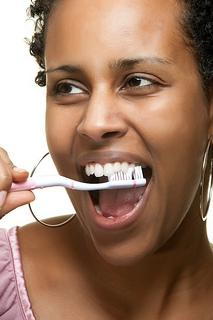
How do you brush your teeth? Do you brush in a straight line or circles? What kind of bristles do you use? Are the bristles on your toothbrush frayed?

When you brush in a circle, you are sweeping all along the gum line, removing the plaque from most angles. When you brush in a straight line, you may often miss the concave portion of the gums. This leaves plaque behind and leads to gingivitis. Whenever gingivitis occurs, the body attacks supporting structures like bone while trying to get rid of the infection. This is periodontal disease, which can cause recession.

Recession may also result from an irritant on the gums, such as a bar from a partial denture or orthodontic appliance (braces).

Gums do not “grow back.” The most common treatment for advanced recession is a tissue graft. There are many different kinds of tissue grafts.

Other factors can cause recession. If you think recession is happening in your mouth, schedule an appointment with the doctor to discuss your options, so you can make the appropriate treatment choice.

This is just a placeholder. You can add some components or content in the sidebar partial.

OUR LOCATION

FIND US ON THE MAP

HOURS OF OPERATION

FIND OUT WHEN WE ARE OPEN

HEADERQUATER

Monday:

8:00 am-5:00 pm

Tuesday:

8:00 am-5:00 pm

Wednesday:

8:00 am-5:00 pm

Thursday:

8:00 am-5:00 pm

Friday:

8:00 am-11:00 am

Saturday:

Closed

Sunday:

Closed

Newsletter Signup

Sign up to receive our updates

Error!

    footerlogo

    David A Bell, DMD PC

    David A Bell, DMD Jamie R Long, DMD

    • Copyright © 2026 MH Sub I, LLC dba Officite.
    • Admin Log In
    • Site Map